Dental Sterilisation in CBD Belapur: What Happens to Every Instrument Before It Touches You
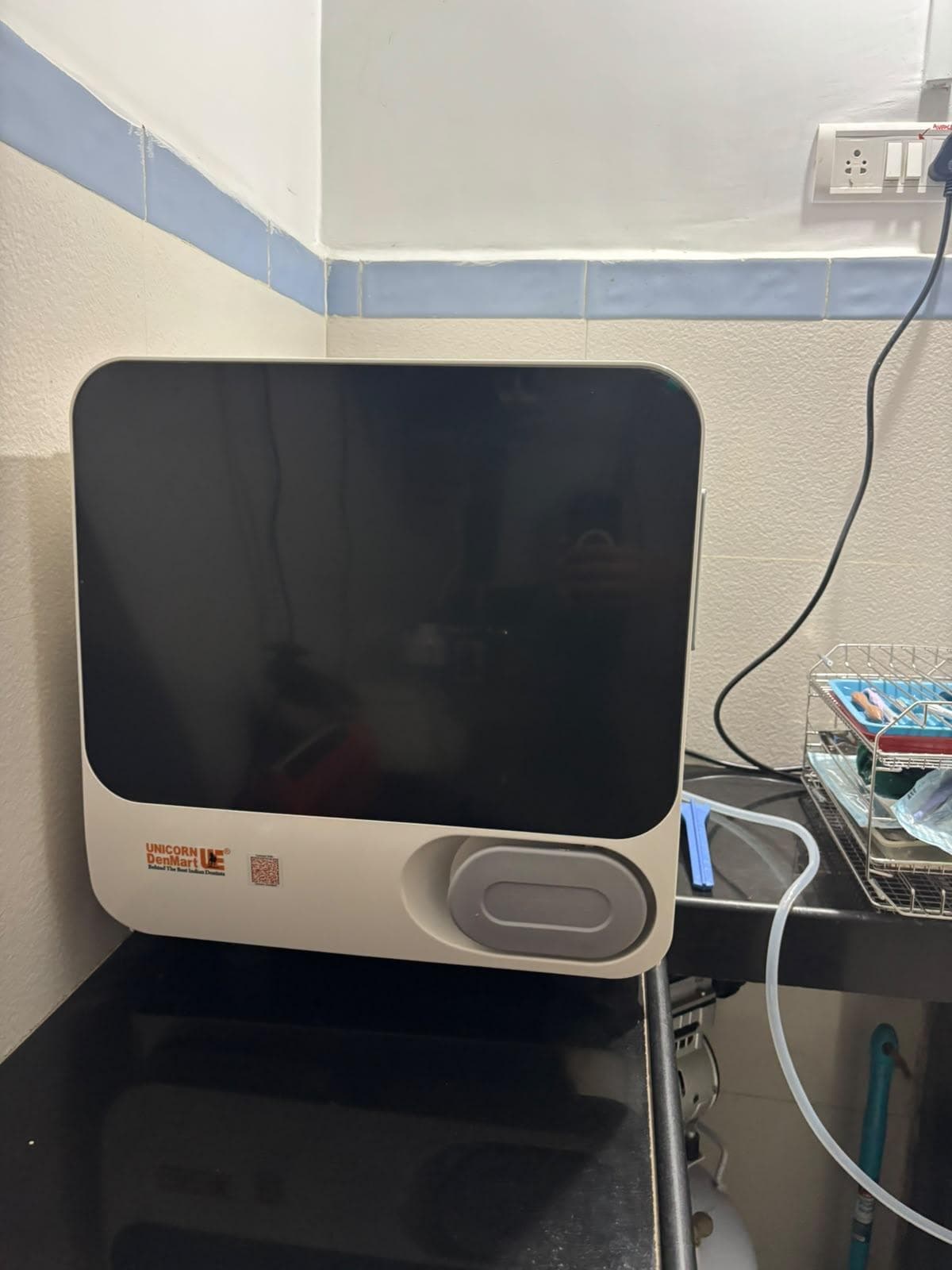
You are sitting in the chair. Dr. Wendy tears open a small sealed pouch, and out comes an instrument you have never seen before. You did not see where it came from. If you are like most patients in CBD Belapur, you have never actually asked what happens to that instrument between your last visit and this one.
At Dr. Wendy's Dental Clinic, that gap between visits is the most tightly controlled part of the whole appointment. Here is exactly what happens inside it.
Why Sterilisation Is the Part of Dentistry You Never See
Every cleaning, filling, and root canal treatment in CBD Belapur depends on instruments that are completely free of bacteria, viruses, and blood-borne pathogens left over from the last patient they touched. It is not a side detail. It is the foundation the rest of the appointment is built on, and Dr. Wendy Lobo treats it that way, not as a box to tick before the real work starts.
Not every dental clinic in Navi Mumbai invests the same way in sterilisation equipment. It is one of those things you cannot see from the waiting room, which is exactly why it is worth understanding before you need it, not after.
It matters even more on a day you are having root canal treatment. That procedure already asks an infected, compromised tooth to heal after the canal is cleaned and sealed. Introducing new bacteria from a poorly sterilised file at that exact moment is not a risk worth taking, especially when the entire point of the appointment is to save the tooth, not create a fresh problem inside it. Dr. Wendy's endodontic focus is one reason sterilisation gets treated as seriously as it does here.
This standard does not change depending on how minor your visit looks on paper. A quick filling gets the same sterilisation process as a two-hour surgical case, because the instruments involved carry the same risk either way. There is no shortcut version reserved for shorter appointments.
Inside a Class B Autoclave
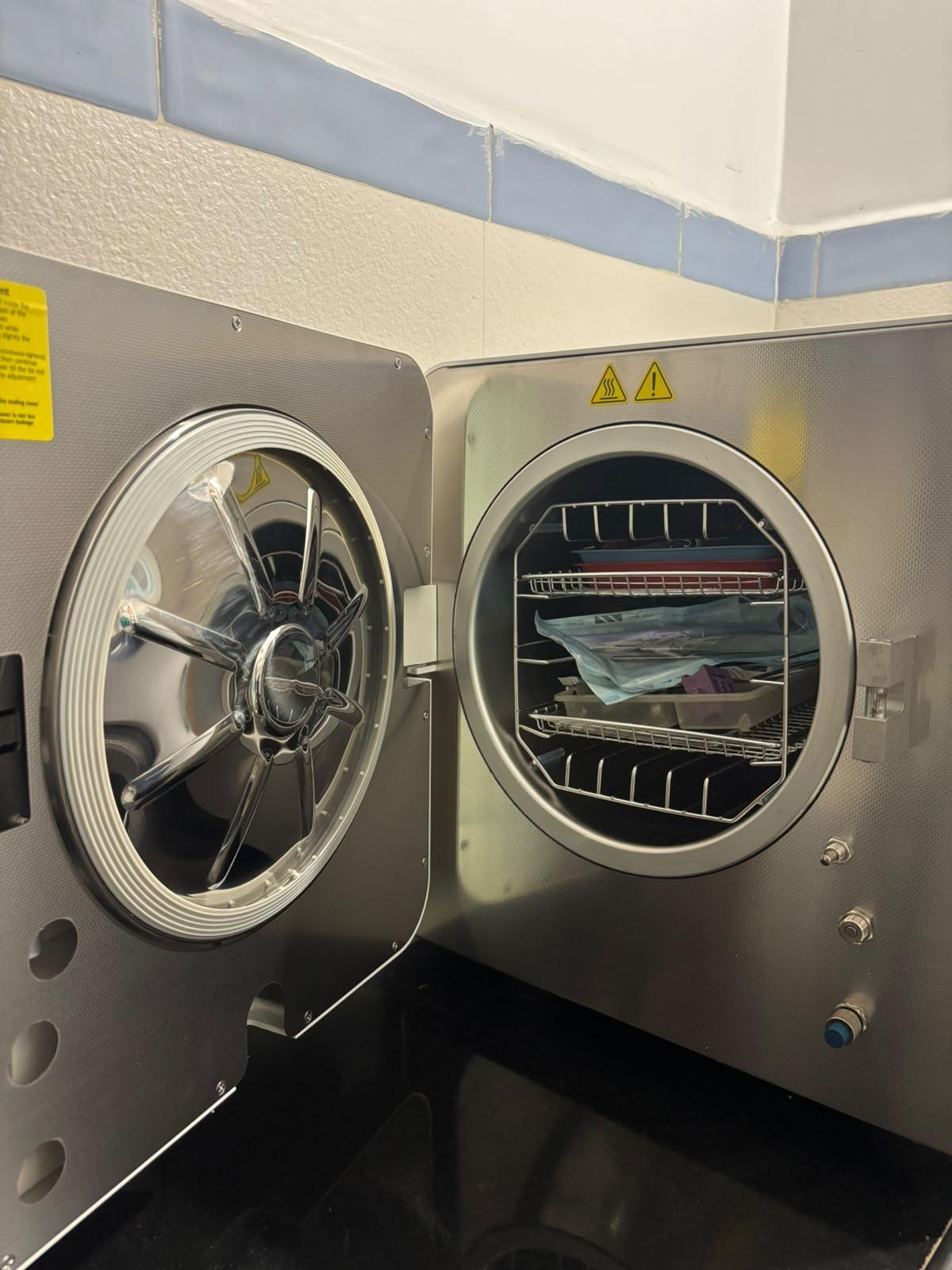
At Dr. Wendy's Dental Clinic, every reusable instrument goes through a Class B autoclave, the highest sterilisation standard defined under the EN 13060 European standard for small steam sterilisers. It is the same class of machine used in hospital operating theatres, not a lower, dental-specific tier.
A Class B cycle starts with a pre-vacuum stage that pulls the air out of the chamber before steam ever enters. That step matters more than it sounds. Trapped air stops steam from reaching every surface of an instrument. Once the air is gone, steam can get into hollow handpieces, the narrow canals of endodontic files, and every fold inside a sealed pouch, not just the flat outer surface of a tool.
The CDC's dental infection prevention guidance and the American Dental Association both treat this level of steam penetration as essential, not optional, for anything that touches blood, saliva, or broken skin. A cycle that only sterilises the outside of an instrument has not done its job. This is exactly why hollow instruments matter so much in dentistry specifically: handpieces, air and water syringe tips, and endodontic files all have narrow internal channels that a simpler autoclave without a vacuum stage can leave untouched, even while everything looks clean on the surface.
Each cycle runs at a fixed temperature and pressure held for a set time, long enough to destroy bacteria, viruses, and bacterial spores, which are the hardest microorganisms to kill. A typical wrapped-instrument cycle holds at 134°C under pressure for several minutes, then moves into a drying phase so pouches come out dry, not damp. A damp pouch matters because moisture can compromise the seal, and a compromised seal means the contents are no longer considered sterile, no matter what the cycle itself achieved.
The clinic does not simply trust that a cycle worked. Every load carries a chemical indicator that changes colour only once the correct temperature, pressure, and time have all been reached together, not just one of the three in isolation. If the indicator has not changed the way it should, that load is treated as unsterile and is run again. It is never used on the assumption that it probably worked.
Individually Packed, Opened Only in Front of You
This is where that sealed pouch from the beginning comes back in. Once a cycle finishes, instruments are not left loose in a drawer or a tray. Each set is sealed into its own pouch immediately, while it is still sterile, and stays sealed until your appointment.
If you have ever wondered whether that little paper and plastic wrapper is just for show, it is not. It is doing more work than your kitchen cling film ever will.
The pouch is opened only at your chair, in front of you, right before it is used. That is not a performance for your benefit, though it does let you see it happen. It is what keeps a sterile instrument sterile all the way from the autoclave to your mouth, and it happens for every patient, every single day, not just when someone is watching.
If you deal with any dental anxiety, this part of the visit can actually help. Watching a sealed pouch get torn open in front of you, rather than an instrument simply appearing on a tray, is a small, concrete thing to focus on. It is one piece of the appointment you do not have to take on trust. You get to see it.
What Never Gets Reused, No Exceptions
These items cannot be sterilised safely between uses, so they are simply not reused, not even with cleaning in between. It is a simple rule, and at Dr. Wendy's Dental Clinic it is treated as non-negotiable, the same way the Class B cycle itself is.
The reason is straightforward. A used needle or an already-worn glove can carry blood-borne pathogens, including Hepatitis B, Hepatitis C, and HIV, from one person's mouth toward another. Sterilisation cannot make a needle safe to reuse. Sharps and single-use plastics are designed to be used once and disposed of, and no autoclave cycle changes that. This is not an extra precaution taken for select patients. It is the baseline for every patient, every time, without anyone having to ask for it.
Used sharps and single-use items are also not simply thrown in a regular bin. They go into dedicated biomedical waste containers, kept separate from general clinic waste and collected for disposal by a licensed handler, in line with how biomedical waste is required to be managed in Maharashtra.
- Needles and local anaesthesia cartridges: used once per patient, then discarded
- Gloves: changed for every single patient, without exception
- Suction tips and saliva ejectors: single-use, disposed of after your visit
- Cotton rolls, gauze, and bibs: single-use only
What to Ask Any Dental Clinic in Belapur About Sterilisation
This is not asking you to switch dentists if you are already comfortable where you are. It is here so you know what good sterilisation actually looks like, wherever you choose to sit in the chair.
A few honest questions are usually enough. Does the clinic use a Class B autoclave, or an older Class N machine that cannot guarantee steam reaches hollow instruments? Are instruments opened from a sealed pouch in front of you, or do they arrive on an open tray you never see prepared? Are needles, gloves, and suction tips visibly new for every patient, not just claimed to be? Is the sterilisation area itself something staff are willing to show you, even briefly, if you ask?
Any clinic confident in its process will answer these questions directly, without brushing past them. If the answer feels vague, that is worth noticing.
At Dr. Wendy's Dental Clinic in CBD Belapur, this is not treated as a sales point. It is simply how every appointment starts, whether you are in for a routine check-up or something more involved, and it is one of the reasons patients across Belapur keep coming back for treatments large and small.
Frequently Asked Questions
Want to see a hygiene-first clinic for yourself?
Whether you are due for a check-up, a root canal, or cosmetic work, come experience the process in person. Book with Dr. Wendy Lobo at Dr. Wendy's Dental Clinic, Shop No 33, Sector-1 Shopping Complex, Police Line, Sector 1, CBD Belapur, Navi Mumbai 400614. Call +91 8355908530